On this page
A large spiritual and residential campus in Maharashtra relied entirely on third-party suppliers for its drinking water.
DhwaNeer designed and commissioned an integrated in-house water treatment, sanitisation and bottle-filling facility that gave the campus greater control over water quality, availability and long-term operating costs.
Project overview
Project at a glance
- System capacity: 500 litres per hour
- Daily production: approximately 4,000 litres
- Bottle filling: more than 150 twenty-litre cans per day
- Target treated-water TDS: 55 to 70 ppm
- Project investment: approximately ₹14 lakh
- Maintenance included: two years comprehensive
- Estimated annual savings after the included maintenance period: approximately ₹6.45 lakh, before electricity and other variable costs
- Indicative simple payback: just over two years
The challenge
The campus purchased approximately 50 twenty-litre water cans every day, equivalent to around 1,000 litres of drinking water. This arrangement cost approximately ₹60,000 per month, or ₹7.2 lakh annually.
Outsourcing also created several operational limitations:
- Complete dependence on external suppliers and delivery schedules
- Limited availability of drinking water during changes in demand
- No direct control over treatment, handling or hygiene practices
- No in-house system for washing and sanitising reusable water cans
- Supplied water with a TDS of approximately 20 ppm, below the campus’s desired treated-water range
- A recurring expense that did not create a long-term operational asset
The campus needed a dependable solution that could serve its residential facilities, guest accommodation, restaurants and community spaces while providing sufficient capacity for future demand.
Our solution
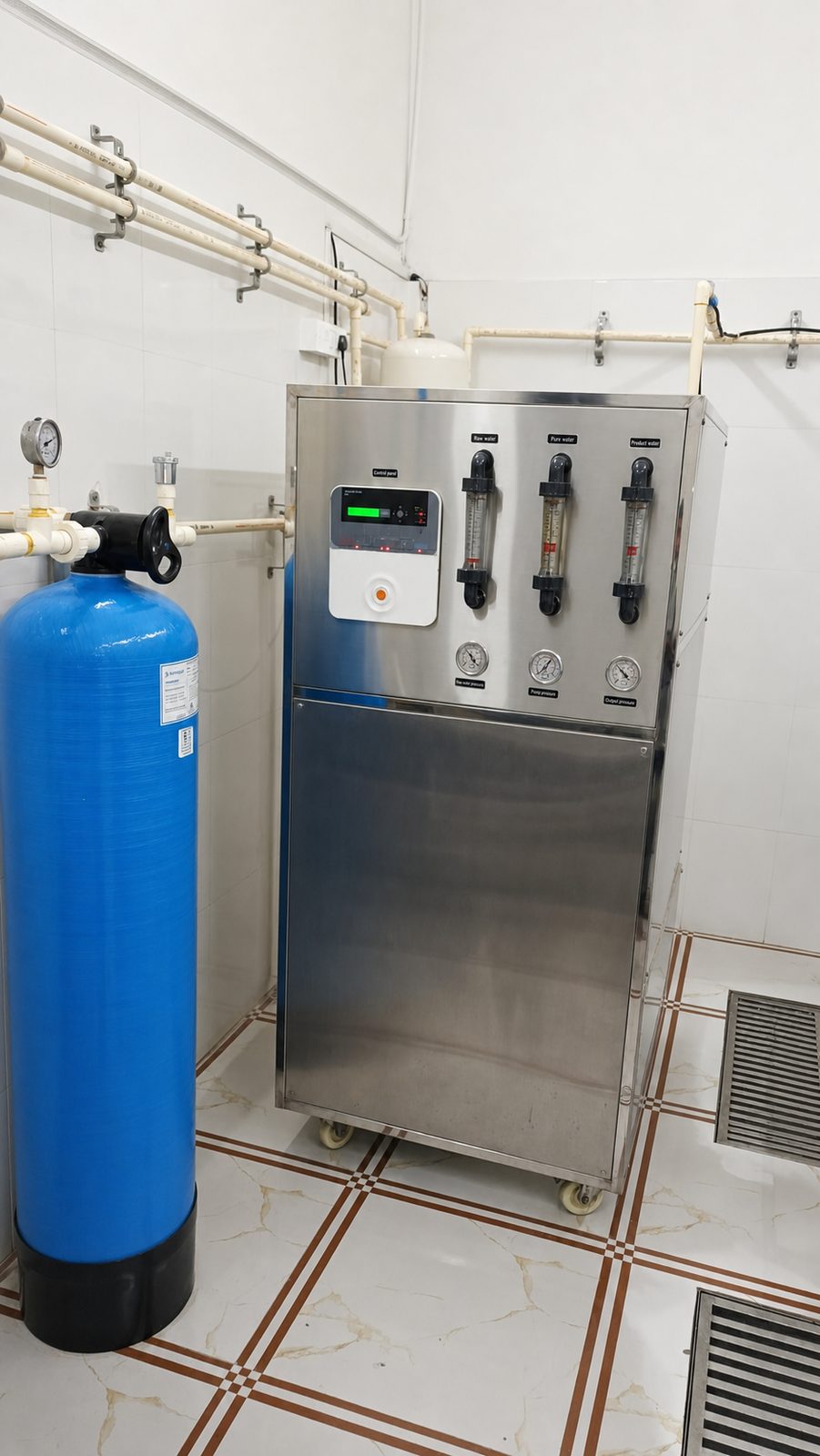
After assessing the campus’s consumption, operating requirements and long-term costs, DhwaNeer engineered a complete drinking water production and filling station.
The solution included:
- Pentair Fleck 5800 automatic sand filter
- 500 LPH reverse osmosis plant
- Pentair Jumbo carbon filtration system
- Pentair Everpure UV900 disinfection system
- Manual twenty-litre bottle-filling station with dual filling taps
- Dedicated bottle-washing station
- Pentair ozonator for hygienic sanitisation of reusable water cans
- Complete system fabrication, piping, installation and commissioning
The treatment stages were integrated into a single workflow, from raw-water filtration and purification through to disinfection, can washing, sanitisation and filling. This enabled the campus team to manage drinking water production in-house with greater consistency and oversight.
Results delivered
Four times the previous daily availability
The new facility can produce approximately 4,000 litres of drinking water per day, compared with the 1,000 litres previously purchased from suppliers.
Greater filling capacity
The dual-tap filling station can support more than 150 twenty-litre cans per day, three times the campus’s earlier daily requirement of 50 cans.
Consistent treated-water quality
The system was configured to deliver treated water within a target TDS range of 55 to 70 ppm, aligned with the client’s stated requirement for regular consumption.
Improved hygiene
An integrated bottle-washing and ozone-sanitisation process helps maintain hygiene when reusable twenty-litre cans are prepared for refilling.
Operational independence
The campus is no longer dependent on third-party suppliers for its routine drinking water requirement. Water can be produced on demand and managed directly by the campus team.
Business impact
| Before installation | After installation |
|---|---|
| Approximately ₹7.2 lakh spent annually on outsourced water | Drinking water produced within the campus |
| Dependent on vendor availability and delivery schedules | On-demand production under the campus’s control |
| Approximately 1,000 litres available per day | Approximately 4,000 litres of daily production capacity |
| Limited oversight of water treatment and handling | Direct control over treatment, sanitisation and filling |
| Recurring expenditure without asset creation | Investment in a long-term water infrastructure asset |
Based on the previous annual purchase cost of ₹7.2 lakh and an estimated annual maintenance cost of approximately ₹75,000 after the included two-year maintenance period, the project may reduce recurring expenditure by approximately ₹6.45 lakh per year before electricity, consumables and other variable operating costs.
Against the approximate project value of ₹14 lakh, this represents an indicative simple payback period of just over two years. Actual savings and payback will vary with production volume, input-water conditions, energy use, consumable replacement and maintenance requirements.
Why this project matters
This project demonstrates that a well-designed water treatment system can do more than improve water quality. It can strengthen operational resilience, create additional capacity and convert a recurring procurement expense into a productive long-term asset.
By bringing treatment and filling operations in-house, the campus gained:
- Reliable access to drinking water
- Greater oversight of quality and hygiene
- Capacity to accommodate higher demand
- Reduced reliance on external vendors
- Meaningful potential for long-term cost savings
The client’s name and identifying campus details have been withheld at their request.