On this page
At a glance
A high-volume central kitchen operated by a premium food brand in Mumbai was using a 500 LPH reverse-osmosis system to treat municipal water with an incoming TDS of only 45 to 50 ppm.
The system was producing water with a TDS of approximately 4 ppm, far lower than the application required. It was also wasting water, occupying valuable kitchen space and contributing to corrosion and equipment-performance issues.
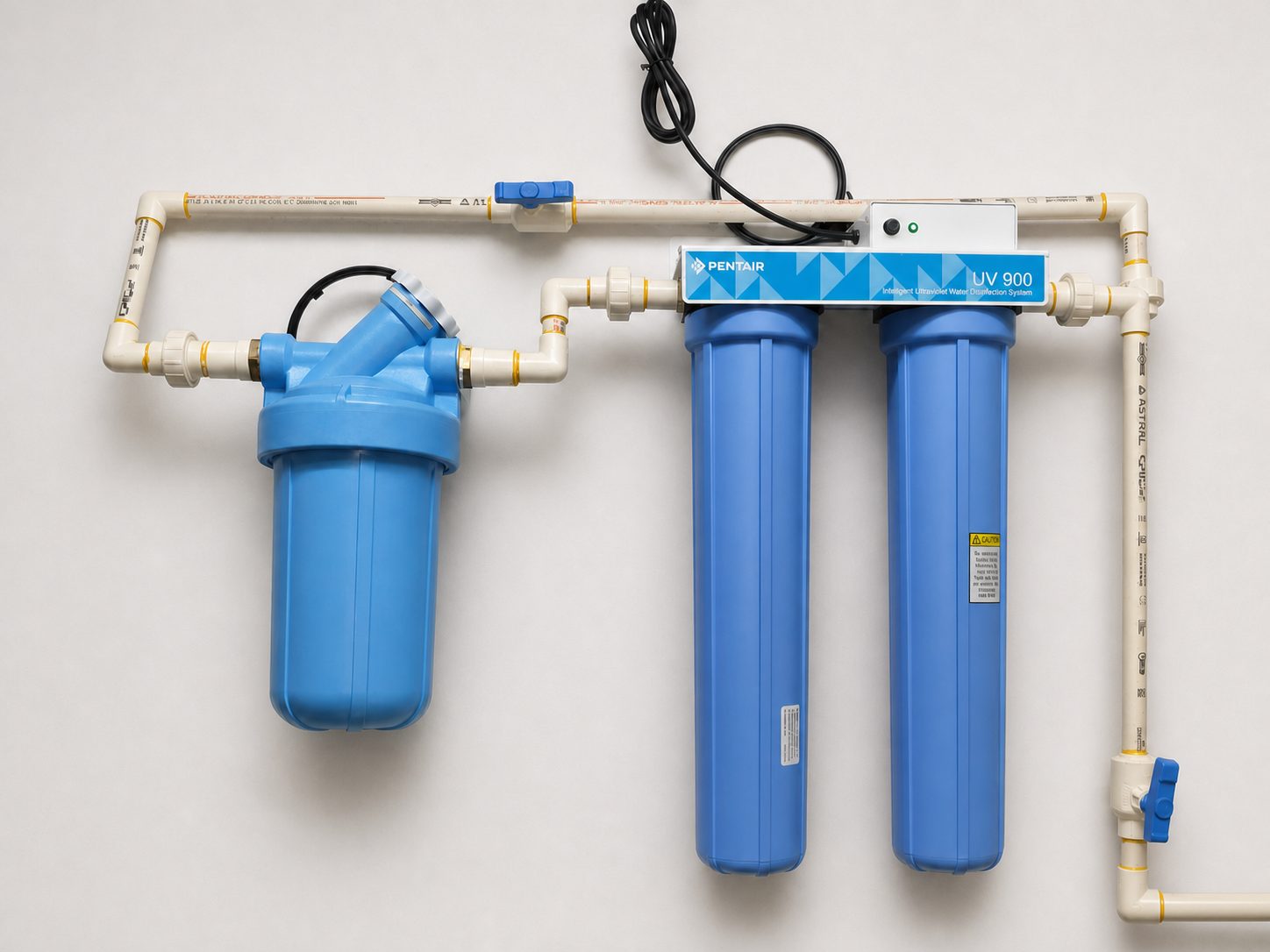
DhwaNeer reassessed the application and replaced the complete RO arrangement with a compact, wall-mounted filtration and UV-disinfection solution.
Key outcomes
- Zero RO reject water
- Approximately 72 sq ft of kitchen space recovered
- Suitable mineral content and conductivity maintained
- Reduced risk of low-TDS water corrosion
- Improved reliability of ovens and other kitchen equipment
- Lower system complexity and maintenance requirements
Customer background
The customer operates a high-volume central kitchen for premium food production. Water is used across critical kitchen processes, making its quality important not only for food preparation but also for the reliable operation of ovens and other equipment.
Because space, hygiene and operational continuity are essential in a central kitchen, the water-treatment system needed to be compact, dependable and appropriate for the available source water.
The challenge
The kitchen was operating a 500 LPH RO system even though the incoming municipal water had a TDS of only 45 to 50 ppm.
RO was unnecessary for this source-water quality and created several operational problems:
- Reject water was generated during purification, resulting in avoidable water wastage.
- The RO plant, storage tank, transfer pump and reject-water tank occupied approximately 12 ft × 6 ft of valuable kitchen space.
- The treated water had a TDS of approximately 4 ppm and extremely low conductivity.
- The low-mineral water was aggressive, increasing the risk of corrosion.
- Ovens and other kitchen equipment experienced performance issues because the water did not provide the conductivity required for reliable operation.
- The over-engineered arrangement increased system complexity and maintenance costs.
Our engineering assessment
DhwaNeer evaluated the incoming water quality, the kitchen’s operating conditions and the requirements of the connected equipment.
The assessment showed that the municipal supply already had suitable mineral characteristics for the application. The water required effective filtration and disinfection, not membrane-based demineralisation.
Rather than replacing the existing RO with another RO plant, DhwaNeer redesigned the treatment approach around the actual water source and end use.
The solution
The complete RO arrangement was replaced with:
- A Pentair Everpure High Flow CSR filtration system
- A Pentair Everpure UV900 disinfection system
The new solution was installed on the wall, removing the need for:
- The RO plant
- An RO-water storage tank
- A transfer pump
- A reject-water storage tank
This compact configuration provided the filtration and microbial control required by the kitchen while retaining the mineral content and conductivity needed by its equipment.
Results delivered
Eliminated reject-water wastage
Removing the RO process eliminated RO reject water, enabling a more responsible and efficient use of the municipal supply.
Recovered valuable kitchen space
The wall-mounted installation recovered approximately 72 sq ft previously occupied by the RO plant, tanks and pump arrangement.
Restored appropriate water characteristics
The redesigned system retained a suitable mineral balance and conductivity instead of reducing the water to approximately 4 ppm TDS.
Improved equipment reliability
Maintaining appropriate conductivity supported the reliable operation of ovens and other kitchen equipment while reducing the corrosion risk associated with aggressive, ultra-low-TDS water.
Simplified operation and maintenance
The new system reduced the number of components, storage requirements and maintenance points, giving the kitchen a simpler and more application-appropriate treatment process.
Why this project stands out
This project reflects DhwaNeer’s engineering-first approach to water treatment.
The objective was not to sell more treatment. It was to identify what the water and the application actually required. By removing an unnecessary RO process, DhwaNeer delivered lower water wastage, better use of kitchen space, simpler maintenance and more reliable equipment performance.
Client name withheld at the customer’s request.